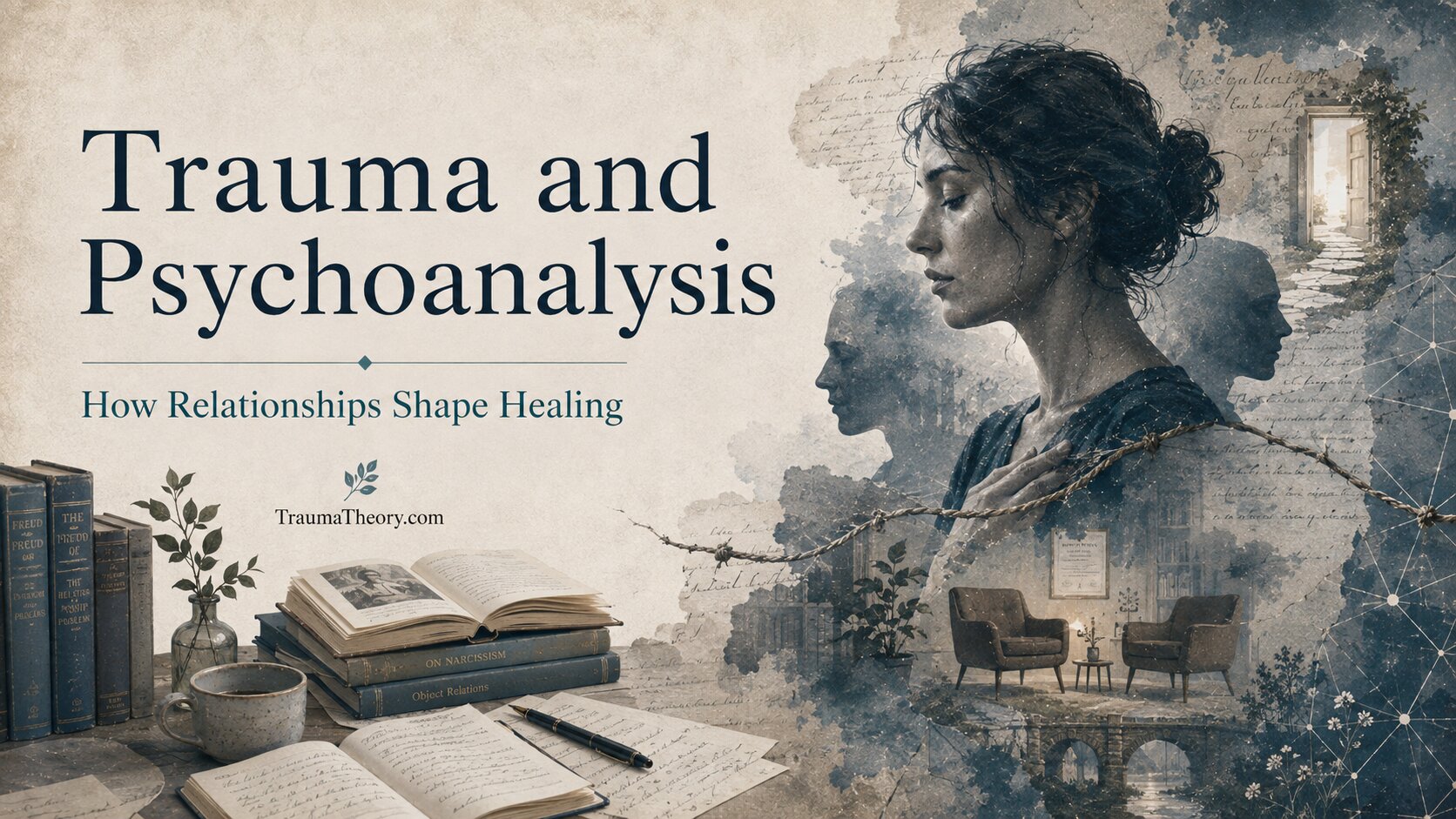
Trauma is not only about fear or memory. It is also about relationships.
Many people think trauma lives only inside one person. They imagine it as a private wound in the mind. But trauma often changes how people connect with others. It can affect trust, love, safety, speech, silence, and the sense of self.
This is why trauma and psychoanalysis are closely connected.
Psychoanalysis gives us a language for inner life. It looks at memory, fear, desire, shame, loss, repetition, and relationships. It asks how the past continues to shape the present.
Trauma theory also asks these questions. It studies how painful experience affects memory, identity, meaning, and connection. The article on what trauma theory means explains this wider view of trauma.
This article focuses on psychoanalysis and relationships. It explains why healing from trauma often needs more than symptom control. It may also need safety, trust, words, and human connection.
What Is Psychoanalysis?
Psychoanalysis is a way of understanding the mind.
It began with Sigmund Freud, but it has changed over time. Modern psychoanalysis is not only about hidden wishes or dreams. It also studies relationships, loss, fear, memory, and emotional life.
Psychoanalysis asks why people repeat painful patterns. It asks why old experiences return in new situations. It also asks how early relationships shape the way people feel about themselves and others.
This is useful for trauma.
Trauma often creates feelings that are hard to name. A person may feel fear, shame, anger, numbness, or confusion. They may not know why a small moment feels so large. They may react to the present as if the past has returned.
Psychoanalysis helps us listen to these reactions with care.
It does not only ask, “What symptom is present?” It also asks, “What does this symptom mean in this person’s life?”
Trauma Is a Wound in Connection
Trauma can be caused by many events. These may include violence, abuse, neglect, war, accident, betrayal, illness, or loss. But trauma is not only about the event itself.
It is also about what the event does to connection.
A person may lose trust in others. They may feel unsafe in their own body. They may feel distant from family, friends, or partners. They may feel alone even when people are nearby.
This is why psychoanalysis often sees trauma as relational.
The article on trauma and psychoanalysis explains trauma as a disruption of relational life. This means trauma can damage the ability to stay connected to oneself and others.
That idea is important.
Healing may not happen through insight alone. It may also happen through safer forms of relationship.
How Trauma Changes Trust
Trust is one of the first things trauma can damage.
If another person caused the harm, trust can feel dangerous. If the trauma happened in childhood, trust may never have felt stable. If someone was betrayed by a person they loved, closeness may later feel risky.
This can shape daily life.
A person may want support but fear depending on others. They may want love but expect pain. They may feel suspicious when someone is kind. They may pull away before anyone can leave them.
These reactions are not signs of weakness.
They may be old survival patterns. The person learned that trust could lead to danger. Their mind and body may still carry that lesson.
Psychoanalysis helps us understand these patterns. It asks how past relationships live inside present relationships.
Trauma and the Repetition of Old Patterns
Many trauma survivors repeat patterns they do not want.
They may choose unsafe relationships. They may fear safe people. They may avoid closeness. They may become silent during conflict. They may feel rejected even when no rejection happened.
This can feel confusing and painful.
The person may ask, “Why do I keep doing this?” They may blame themselves. They may feel trapped in the same story again and again.
Psychoanalysis has long studied repetition. It asks why people return to painful emotional places. It also asks how old wounds seek expression in present life.
The article on trauma theory and PTSD explains how trauma can keep the past active in the present. Psychoanalysis adds another question: how does the past return through relationships?
Sometimes repetition is not a wish to suffer. It may be an attempt to understand what once felt impossible.
Trauma and Memory in Psychoanalysis
Memory is central to psychoanalysis.
But psychoanalysis does not treat memory as a simple record. Memory can be emotional, bodily, symbolic, and incomplete. It can appear through dreams, symptoms, habits, fears, and relationship patterns.
Trauma memory can be especially difficult.
A person may not remember everything clearly. They may remember feelings more than facts. They may feel terror without a full story. They may feel shame without knowing where it began.
The article on trauma and memory explains why the past can feel present after trauma. Psychoanalysis helps us understand how that past may return through speech, silence, and attachment.
A person may say one thing but feel another. They may avoid one topic but repeat it indirectly. They may forget details but live inside their emotional force.
This is why listening matters.
Psychoanalysis listens not only to words, but also to pauses, fears, patterns, and repeated feelings.
Trauma and the Divided Self
Trauma can make the self feel divided.
One part of the person may want closeness. Another part may fear it. One part may want to remember. Another part may avoid memory. One part may feel strong. Another part may feel helpless.
This division can be painful.
A person may feel confused by their own reactions. They may think they are inconsistent or broken. But trauma often creates inner conflict.
The article on PTSD and dissociation explains how trauma can make the mind feel divided. Psychoanalysis also takes this divided experience seriously.
It asks how different parts of the self developed. It asks what each part is protecting. It also asks what kind of relationship can help these parts speak to each other.
The goal is not to force the person to feel whole quickly. The goal is to create enough safety for the divided self to become more understandable.
Why Relationships Can Feel Dangerous
For many trauma survivors, relationships can feel both needed and dangerous.
A person may long for care, but fear depending on anyone. They may want to speak, but fear being judged. They may want love, but expect betrayal. They may want comfort, but feel unsafe when someone comes close.
This is not simple avoidance.
It may be the result of earlier harm. If closeness once brought pain, the body may treat closeness as risk. If care was mixed with control, help may feel threatening. If love was unsafe, safety may feel unfamiliar.
Psychoanalysis helps us understand this emotional logic.
The reaction may not make sense from the outside. But inside the person’s history, it may have a reason.
Healing begins when these reasons can be understood without shame.
The Role of Speech in Healing
Psychoanalysis is often called a talking treatment.
But talking about trauma is not always easy. Some experiences feel too painful for words. Some memories feel broken. Some feelings appear as silence, anger, numbness, or confusion.
This does not mean speech is useless.
Words can slowly give shape to experience. They can help a person connect feelings with memory. They can also help turn a private wound into something that can be witnessed.
But speech needs safety.
A person cannot always speak just because someone asks them to. They may need time. They may need trust. They may need a relationship where silence is also respected.
In psychoanalysis, healing can begin when the person feels heard without being forced.
Trauma, Shame, and Being Seen
Shame is common after trauma.
A person may feel there is something wrong with them. They may blame themselves for what happened. They may feel weak because they froze, stayed quiet, or could not escape.
Shame makes trauma more lonely.
It can make a person hide their pain. It can make them fear being known. It can also make care feel undeserved.
Psychoanalysis treats shame with seriousness. It asks where shame came from. It asks whose voice the person has carried inside. It asks how shame protects against even deeper pain.
A healing relationship can help shame change.
When a person is seen with care, shame may slowly lose power. They may begin to feel that trauma is something that happened to them, not the whole truth of who they are.
Psychoanalysis and Meaning After Trauma
Trauma can damage meaning.
After trauma, life may feel different. The world may feel unsafe. Trust may feel foolish. The future may feel closed. The self may feel broken or strange.
This is why healing cannot only mean reducing symptoms.
A person may need to rebuild meaning. They may need to ask what life can mean after pain. They may need to understand how trauma changed their view of love, safety, trust, and self-worth.
The article on trauma and meaning explores this larger effect of trauma. Psychoanalysis adds that meaning is often rebuilt in relationship.
A person may discover meaning through being heard. They may find words for what felt unspeakable. They may understand old patterns with less blame. They may begin to feel that life can hold more than trauma.
The Therapeutic Relationship
In psychoanalysis, the relationship between patient and analyst matters.
It is not only a place to talk. It can also become a place where old fears appear. A person may fear judgment, rejection, control, silence, or abandonment. These fears may enter the therapy relationship.
This can be difficult, but it can also be useful.
Old patterns may become visible. The person and analyst can think about them together. The present relationship can help reveal how past relationships still live inside the mind.
This process needs care.
A good therapeutic relationship should not repeat trauma. It should offer steadiness, attention, and respect. It should help the person notice old fears without being overwhelmed by them.
In this way, relationship becomes part of healing.
Psychoanalysis Is Not the Only Path
Psychoanalysis is one way to understand trauma. It is not the only way.
Trauma can also be studied through psychology, psychiatry, neuroscience, literature, history, and social theory. Many people heal through different forms of therapy, community, art, writing, spiritual practice, or supportive relationships.
But psychoanalysis offers something important.
It takes inner life seriously. It listens to meaning, memory, dreams, shame, silence, and repetition. It also understands that relationships can both wound and heal.
This makes it useful for trauma theory.
It reminds us that trauma is not only a fear response. It is also a disturbance in how a person relates to self, others, and life.
Healing Through Relationship
Healing from trauma often requires safety.
Safety may begin in the body. It may begin in daily routine. It may begin through words. It may also begin in relationships where the person is not judged or rushed.
A safe relationship can help the person feel less alone. It can show that closeness does not always lead to harm. It can give space for memory, anger, grief, fear, and confusion.
This does not mean another person can simply fix trauma.
Healing is not that simple. But relationships can support the slow work of healing. They can help restore trust, language, and meaning.
Psychoanalysis helps us understand why this matters.
If trauma damages connection, then healing may need connection too.
Conclusion
Trauma and psychoanalysis belong together because trauma is deeply relational.
Trauma can damage trust, memory, identity, safety, and meaning. It can make relationships feel dangerous. It can make the self feel divided. It can make the past return through present feelings and patterns.
Psychoanalysis helps us listen to these experiences with care.
It does not reduce trauma to symptoms only. It asks what the symptoms mean. It asks how the past lives in the present. It asks how relationships have shaped pain and how relationships may also support healing.
Trauma may begin with fear, helplessness, or loss. But its effects often continue through silence, shame, repetition, and broken trust.
Healing may involve words, memory, safety, and time. It may also involve relationships where the person can be seen without judgment.
This is why relationships matter in trauma healing. They are not only part of life after trauma. They may also be part of how life becomes livable again.


