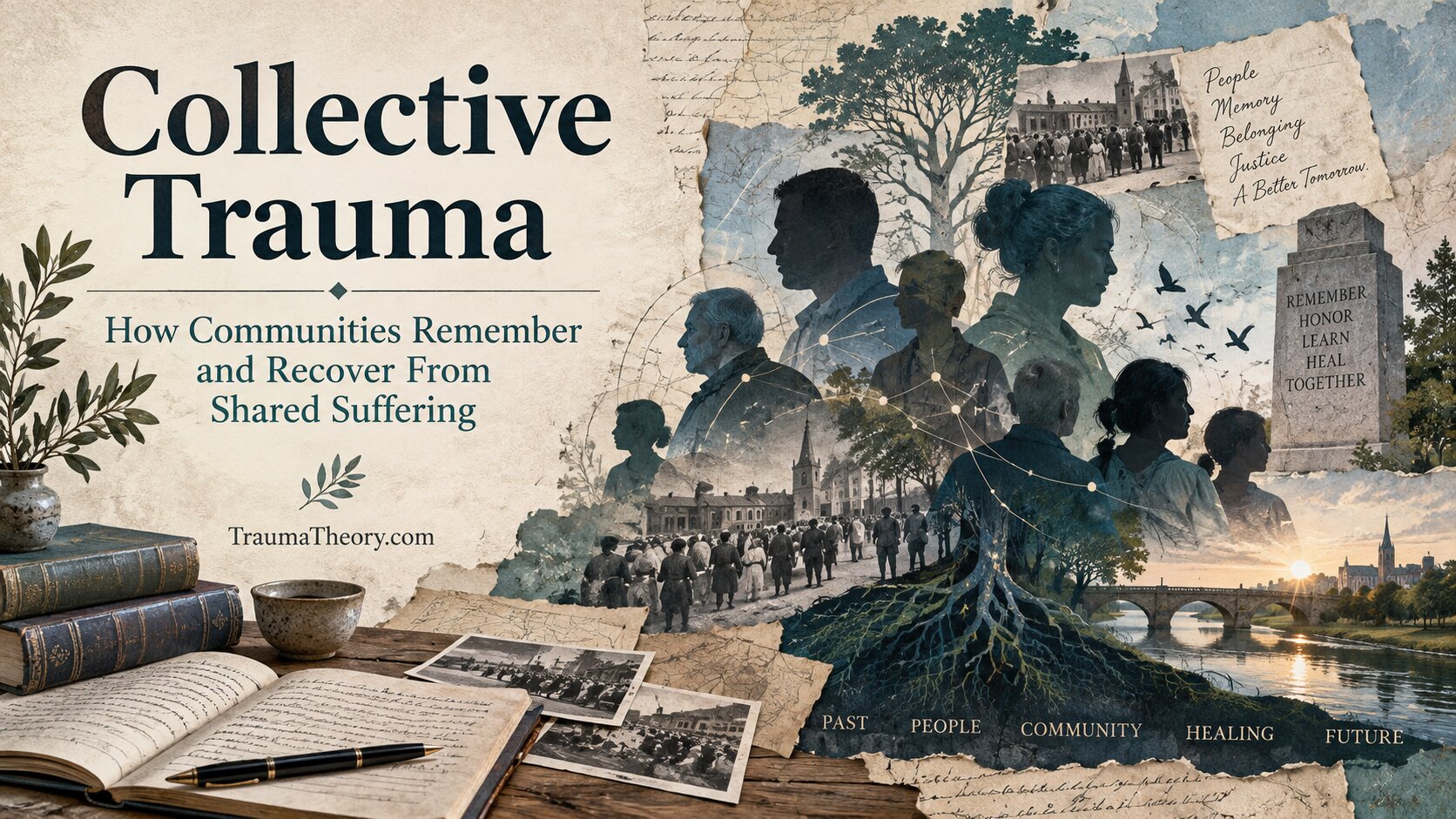
Trauma is often discussed as a personal experience.
We think about one person, one event, one memory, or one painful moment. But trauma can also affect groups of people. Entire communities can experience fear, loss, displacement, violence, or a deep change in how they understand themselves.
This is called collective trauma.
Collective trauma describes the emotional and social impact of shared suffering. It can affect families, communities, nations, cultures, and generations. It changes not only individual lives but also shared memories, traditions, relationships, and ideas about the future.
This connects with the broader ideas explored in What Is Trauma Theory? Meaning, PTSD, Memory, Literature, and Psychoanalysis, where trauma is understood as something that affects memory, identity, relationships, and meaning.
Individual trauma asks:
“What happened to this person?”
Collective trauma asks:
“What happened to this group, and how does that experience continue?”
What Is Collective Trauma?
Collective trauma happens when a group experiences a deeply harmful event or ongoing situation.
This may include:
- War and violence
- Genocide
- Forced migration
- Natural disasters
- Political oppression
- Slavery and colonization
- Community violence
- Cultural destruction
- Economic or social crises
The impact is not only the event itself.
Collective trauma also includes what happens afterward. It includes grief, fear, silence, memory, conflict, rebuilding, and the struggle to create meaning after suffering.
A community may continue carrying the effects long after the original event has ended.
The buildings may be repaired. The political situation may change. New generations may be born.
But memories and meanings can remain.
How Collective Trauma Differs From Individual Trauma
Individual trauma usually focuses on one person’s experience.
A person may struggle with fear, memories, relationships, trust, or a sense of safety after a painful event.
Collective trauma works differently because it involves many people.
A community may share:
- Similar memories
- Similar fears
- Similar losses
- Similar stories
- Similar feelings of injustice
The trauma becomes part of the group’s identity.
This does not mean every person in the group experiences trauma in the same way. People respond differently. Some speak openly. Others remain silent. Some remember strongly. Others distance themselves from the past.
Collective trauma contains many individual experiences connected by a shared history.
Collective Memory and Trauma
Memory is one of the most important parts of collective trauma.
Groups remember through stories, traditions, monuments, education, family conversations, photographs, literature, and public discussions.
But collective memory is not always simple.
A community may struggle with questions such as:
What should be remembered?
What should be forgotten?
Who gets to tell the story?
Whose suffering is recognized?
Whose suffering is ignored?
These questions show why memory is connected to power and identity.
The article on Trauma and Memory explains how trauma can make the past feel present for individuals. Collective trauma can create a similar experience for communities. Historical events may continue shaping how groups understand themselves today.
The past becomes part of the present.
Trauma, History, and Identity
Communities often build identity through shared history.
People understand where they come from through family stories, cultural traditions, and collective experiences. When a community experiences major suffering, that history can become a powerful part of identity.
Sometimes this creates connection.
People may come together because they share memories and values. They may preserve stories to honor those who suffered. They may create art, literature, and traditions that keep memory alive.
But collective trauma can also create division.
Different groups may remember the same event differently. Some may want recognition. Others may want to move forward without discussing the past. Some may deny the suffering of others.
This creates difficult questions about truth, responsibility, and healing.
The Role of Testimony in Collective Trauma
Testimony plays an important role in collective trauma.
When individuals share their experiences, they help preserve memories that may otherwise disappear. Personal stories can become part of a larger historical record.
This is why testimony matters.
The article on Trauma and Testimony: Why Speaking About Pain Is So Difficult explains how speaking about trauma requires safety, trust, and careful listening.
The same is true at a collective level.
Communities need spaces where painful histories can be discussed honestly. Without those spaces, suffering may be ignored or repeated.
But testimony also requires responsibility.
A community’s story should not become only a symbol. Real people lived those experiences. Real people carried the pain.
Collective trauma should always return to human lives.
Collective Trauma and Silence
Silence is common after collective trauma.
Communities may avoid painful subjects because they feel too difficult. Families may avoid discussing past suffering. Governments may hide uncomfortable histories. Survivors may feel that nobody wants to hear.
Silence can sometimes protect people.
A person or community may not be ready to speak. They may need time before they can face painful memories.
But long-term silence can also create problems.
When suffering is ignored, future generations may inherit confusion, fear, or unresolved conflict. People may feel the effects of history without understanding where those feelings come from.
Speaking about collective trauma does not mean staying trapped in the past.
It can help communities understand the past and build a different future.
Trauma Across Generations
Collective trauma can influence later generations.
Children and grandchildren may grow up with stories of past suffering. They may inherit fears, beliefs, traditions, or family patterns connected to earlier experiences.
This does not mean every future generation experiences trauma in the same way.
Instead, it means history can shape how people understand safety, identity, belonging, and trust.
A family affected by displacement may carry stories of loss. A community affected by violence may pass down memories of survival. A culture affected by oppression may preserve traditions as a way of protecting identity.
These connections show why trauma is not only personal.
Human beings live inside relationships and histories.
Collective Trauma and Literature
Literature often helps communities process shared suffering.
Novels, poems, memoirs, and historical writing can preserve experiences that official records may ignore. Stories can give voice to people who were forgotten or silenced.
This connects with Trauma Theory in Literature: How Stories Represent Pain, Memory, and Silence.
Literature can explore:
- Loss
- Memory
- Identity
- Survival
- Silence
- Testimony
- Historical violence
Stories do not erase trauma.
But they can help communities think about what happened and what it means.
They can create connection between generations.
Collective Trauma and Meaning
One of the deepest effects of trauma is the damage it can cause to meaning.
After collective suffering, communities may ask:
Why did this happen?
How could people allow this?
How can we rebuild?
These are not only political questions. They are human questions.
The article on Trauma and Meaning: Why Life Can Feel Different After Trauma explores how trauma can change safety, identity, trust, and hope.
For communities, rebuilding meaning may involve:
- Remembering honestly
- Honoring those affected
- Creating justice
- Protecting culture
- Building stronger relationships
- Teaching future generations
Meaning does not remove pain.
It helps people understand what happened and decide what comes next.
Collective Trauma and Relationships
Trauma affects relationships.
This is true for individuals and communities.
After shared suffering, people may struggle with trust. They may fear outsiders. They may disagree about how to remember the past. They may feel connected through shared pain but divided by different interpretations.
This is why relationships matter.
The article on Trauma and Psychoanalysis: How Relationships Shape Healing explains how trauma affects connection and trust.
Collective healing also requires connection.
Communities heal through conversation, respect, listening, and shared responsibility.
Healing does not mean everyone must agree about everything. It means people can create spaces where difficult truths can be discussed.
What Collective Trauma Theory Still Needs to Explore
Collective trauma is a large area that still needs deeper discussion.
Important questions remain:
How do societies remember violence?
How do communities balance remembering and moving forward?
How should digital platforms handle collective suffering?
How can future generations learn history without inheriting only pain?
How can communities create justice without remaining trapped by trauma?
These questions connect trauma theory with history, politics, literature, psychology, and culture.
They also create opportunities for thoughtful discussion.
Readers interested in collective memory, social trauma, historical suffering, or the relationship between trauma and society are welcome to contribute ideas and questions.
A meaningful comment can become the beginning of a future discussion.
Can Communities Recover From Collective Trauma?
Recovery from collective trauma is not about forgetting.
Forgetting can remove important lessons. It can silence survivors. It can allow harmful patterns to continue.
Recovery is about creating a healthier relationship with the past.
Communities may recover through:
- Honest conversations
- Preserving memories
- Supporting survivors
- Protecting culture
- Creating safer systems
- Building new connections
The goal is not to erase history.
The goal is to remember without being controlled by the pain.
Conclusion
Collective trauma shows that suffering does not only affect individuals.
It can shape communities, cultures, histories, and future generations. It can influence memory, identity, relationships, and meaning.
Understanding collective trauma helps us see why some events continue affecting people long after they happen.
It also reminds us that healing is not only personal.
Communities heal through listening, remembering, understanding, and rebuilding connections.
Trauma may become part of a group’s history. But it does not have to become the only story that defines them.
The work of healing begins when people can remember the past while creating space for a different future.


