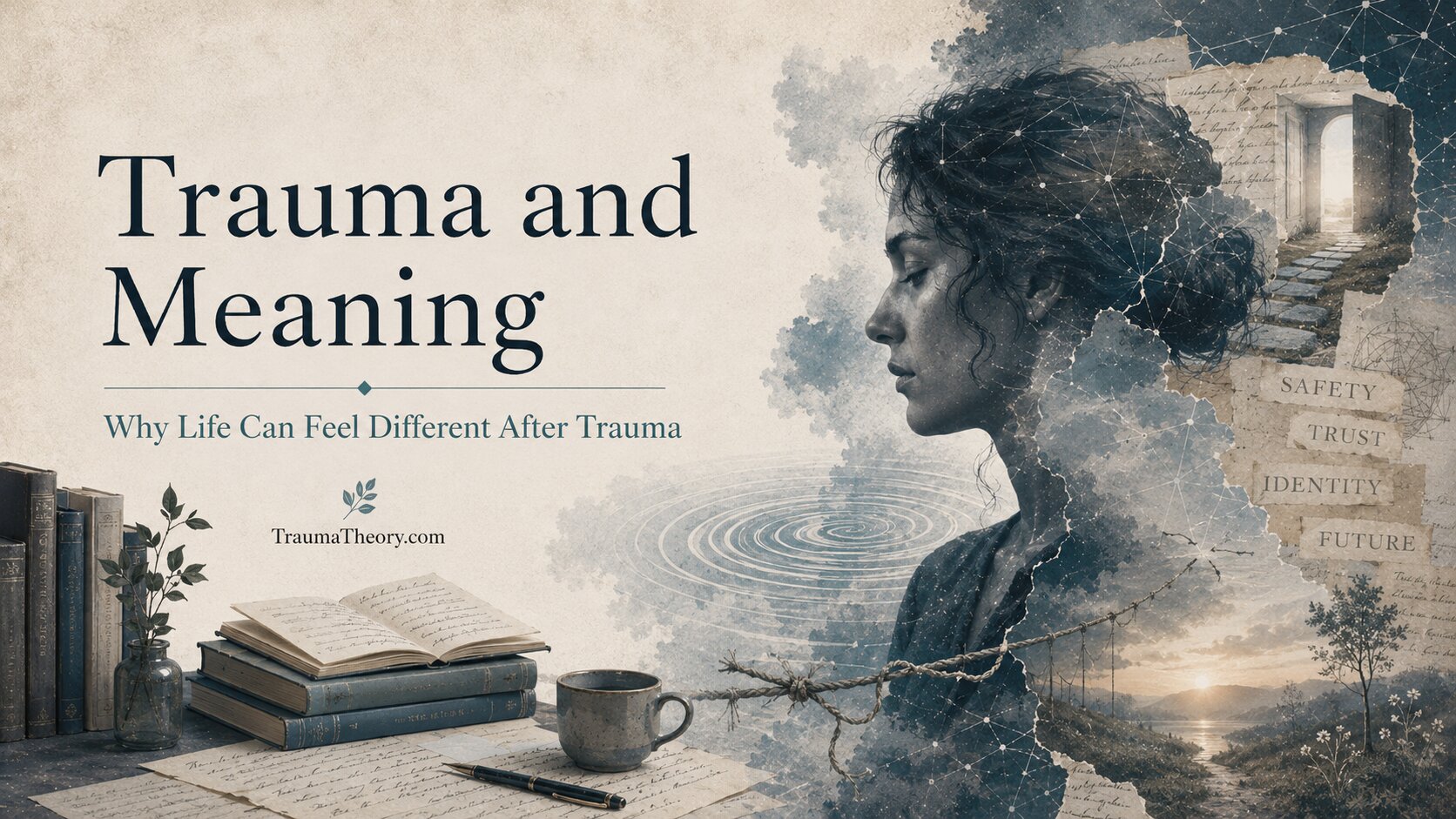
Trauma does not only hurt the mind or body. It can also change the way life feels.
After trauma, the world may look the same from outside. The same rooms, streets, people, and routines may still be there. But inside, something may feel changed. Safety may feel weaker. Trust may feel harder. The future may feel less open. Life may no longer feel as clear or stable as it once did.
This is why trauma and meaning are closely connected.
Trauma is not only about fear. It is also about what fear does to a person’s sense of life. It can change how someone understands themselves, other people, relationships, love, justice, and the future.
In the article on what trauma theory means, trauma is explained as something that affects memory, identity, relationships, literature, psychoanalysis, and meaning. This article focuses on meaning itself and why life can feel different after trauma.
What Does Meaning Mean After Trauma?
Meaning is the way people understand life.
It includes the stories we tell ourselves about who we are, what matters, whom we can trust, and what kind of world we live in. Meaning helps people feel that life has some order. It helps us believe that our actions matter and that the future can still hold value.
Trauma can damage this sense of order.
A person may once believe the world is mostly safe. After trauma, that belief may break. A person may once trust their own judgment. After trauma, they may question themselves. A person may once feel close to others. After trauma, closeness may feel dangerous or uncertain.
This does not mean the person is thinking wrongly. It means trauma has changed the emotional meaning of life.
The question is not only, “What happened?” The deeper question may be, “What does life mean after this happened?”
Trauma Can Make the World Feel Unsafe
One of the strongest effects of trauma is the loss of safety.
Safety is not only physical. It is also emotional. A person may be in a safe place, but still feel danger inside. They may know that the threat is over, but their body may not fully believe it.
This can make ordinary life feel strange.
A sound may feel threatening. A quiet room may feel tense. A kind person may still feel risky. A normal day may feel fragile, as if something bad could happen at any time.
This is one reason trauma can change meaning. The world no longer feels like the same world.
The article on trauma theory and PTSD explains how trauma can make the past remain active in the present. That same idea also applies to meaning. The old danger may shape how the present feels, even when the present is different.
The person is not choosing fear. Their sense of safety has been changed by experience.
Trauma Can Break Trust
Trust is another part of meaning.
People need trust to live with others. We trust friends, family, partners, communities, doctors, teachers, and social systems. We also trust ourselves to understand danger and make decisions.
Trauma can damage all of these forms of trust.
If another person caused the trauma, trust may become especially difficult. If the trauma involved betrayal, the person may wonder whether anyone is safe. If the trauma happened in a place that should have offered care, the damage may feel even deeper.
A person may also lose trust in themselves. They may ask why they did not leave sooner. They may blame themselves for freezing, staying silent, or not seeing danger. These questions can be painful, but they often come from trauma’s effect on meaning.
Trauma can make a person believe they failed, even when they were surviving.
This is why careful language matters. Blame can deepen the wound. Understanding can help rebuild trust slowly.
Trauma and the Sense of Self
Trauma can change how a person sees themselves.
Before trauma, someone may feel confident, open, loving, or hopeful. After trauma, they may feel weak, broken, ashamed, angry, numb, or distant from who they used to be.
This change can be very painful.
A person may think, “I am not myself anymore.” They may miss the person they were before. They may feel divided between the old self and the new self. They may wonder whether they can ever feel whole again.
This does not mean the self has disappeared. It means the self has been affected by overwhelming experience.
The article on PTSD and dissociation explains how trauma can make the mind feel divided. That divided feeling can also affect meaning. If a person feels separated from feelings, memories, or the body, it may become harder to feel connected to the self.
Trauma can make identity feel uncertain. Rebuilding meaning may involve learning how to live with what happened without becoming only what happened.
Trauma Can Make Relationships Feel Different
Trauma often changes relationships.
A person may want support, but feel unable to accept it. They may want closeness, but fear being hurt. They may love others, but still pull away. They may feel alone even when people are nearby.
This is one of trauma’s deepest effects.
Relationships are part of how people make meaning. Love, friendship, family, and community help people feel connected to life. When trauma damages trust, these connections may feel unsafe or confusing.
A person may react strongly to small moments. A delayed reply may feel like rejection. A raised voice may feel like danger. Silence may feel like abandonment. Closeness may feel overwhelming.
These reactions may not only belong to the present. They may carry the meaning of earlier pain.
The article on trauma and psychoanalysis is useful here because it treats trauma as a disruption of relational life. Trauma can affect how people stay connected to others and to themselves.
Healing may involve relationships where safety can be slowly felt again.
Trauma and Memory Can Change Meaning
Memory is closely tied to meaning.
People often make sense of life through memory. We remember what happened, give it a place, and connect it to our story. Trauma can disturb this process.
A traumatic memory may not feel like a normal memory. It may return through fear, dreams, body tension, flashbacks, or sudden emotion. It may feel unfinished. It may not fit easily into a clear story.
The article on trauma and memory explains why the past can feel present after trauma. When memory does not feel settled, meaning may also remain unsettled.
A person may keep asking why the event happened. They may ask what it says about them. They may ask whether life can still feel safe or valuable.
These questions are not signs of weakness. They are signs that the mind is trying to understand something painful.
Trauma can break the story a person had about life. Rebuilding meaning may mean finding a new story that can hold both pain and survival.
Trauma Can Create Shame
Shame is one way trauma attacks meaning.
A person may feel that the trauma says something bad about them. They may feel dirty, weak, foolish, helpless, or unworthy. They may blame themselves for what happened or for how they reacted.
Shame can make trauma feel private and isolating.
The person may believe no one will understand. They may hide their pain. They may avoid talking about the event. They may feel that silence is safer than being judged.
But shame often belongs to trauma, not to the person’s true worth.
Many trauma responses are survival responses. Freezing, going numb, staying quiet, obeying, disconnecting, or not fighting back can happen when the body and mind are overwhelmed. These responses do not make a person guilty.
Trauma theory helps separate survival from shame. It gives people a better way to understand what happened to them.
Trauma Can Make Time Feel Different
Trauma can also change the meaning of time.
For some people, the past feels too close. It returns through memories, reactions, and body states. For others, the future feels closed. They may struggle to imagine joy, safety, or hope.
The present may also feel thin or unreal.
A person may go through daily life without feeling fully there. They may work, speak, cook, drive, or meet others, but feel distant inside. They may feel as if life is happening around them rather than with them.
This can make meaning difficult.
Meaning often depends on feeling connected to time. We need some connection to the past, present, and future. Trauma can disturb all three.
The past may feel unfinished. The present may feel unsafe. The future may feel uncertain.
Rebuilding meaning may involve slowly learning that the present is not only a place where the past returns. It can also become a place where something new begins.
Why “Moving On” Is Not Simple
People sometimes tell trauma survivors to move on. This may sound helpful, but it often misses the depth of trauma.
Moving on is not simple when trauma has changed meaning.
A person is not only trying to forget an event. They may be trying to rebuild trust, safety, identity, memory, relationships, and hope. They may be trying to understand how life can still matter after something terrible happened.
This takes time.
Forgetting is not the same as healing. Silence is not the same as peace. Functioning is not the same as feeling whole.
A person may appear fine from the outside but still struggle inside. They may work, smile, answer messages, and care for others. But their sense of life may still feel damaged.
Healing from trauma often means learning how to live with memory without being controlled by it. It also means building meaning without denying pain.
Can Meaning Be Rebuilt After Trauma?
Meaning can often be rebuilt, but it may not return in the same form.
The person may not go back to who they were before. Some beliefs may never feel the same. Some losses may remain. Some memories may always hurt.
But new meaning can still develop.
A person may learn that survival matters. They may learn that their pain deserves words. They may find relationships that feel safer. They may create art, write, think, speak, or help others. They may build a life that includes the trauma without being fully defined by it.
This does not make the trauma good. It does not mean suffering was necessary. Trauma should not be romanticized.
Rebuilding meaning does not justify what happened. It helps the person live after what happened.
That difference matters.
Meaning After Trauma Is Personal
There is no single way to rebuild meaning.
Some people find meaning through therapy. Some find it through writing. Some find it through spiritual life, activism, family, friendship, study, art, work, or quiet daily routines.
Some people need to speak. Others need silence first. Some need community. Others need space. Some need to understand the past. Others first need to feel safe in the present.
Trauma theory should not force one path on everyone.
It should help us ask better questions. What was broken? What feels unsafe? What was lost? What remains? What kind of meaning can be built now?
These questions need patience.
Meaning after trauma is not a quick answer. It is often a slow process of living, remembering, grieving, trusting, and beginning again.
Trauma Theory and the Search for Meaning
Trauma theory matters because it helps us understand trauma as more than symptoms.
Symptoms matter. Fear, flashbacks, numbness, avoidance, nightmares, and body tension can all be painful. But trauma also affects the larger structure of life.
It can change how a person understands the world. It can make love feel risky. It can make trust feel foolish. It can make the future feel empty. It can make the self feel broken.
This is why trauma and meaning belong together.
The older article on trauma destroys meaning directly explores this idea. Trauma can damage the sense that life is ordered, safe, or understandable.
But trauma theory also helps us think about what comes after meaning is damaged. It helps us ask how people survive, speak, remember, and reconnect.
Conclusion
Trauma can make life feel different.
It can change memory, safety, trust, relationships, identity, time, and hope. It can make the world feel less stable and the self feel less certain. It can turn ordinary life into something strange or unsafe.
This is why trauma and meaning are deeply connected.
Trauma does not only ask, “What happened?” It also asks, “How can life be understood after this?” That question may take time to answer.
Rebuilding meaning does not mean forgetting trauma. It does not mean pretending everything is fine. It means finding a way to live with memory, pain, and survival without letting trauma be the only meaning of life.
The past may remain important. The wound may still matter. But meaning can slowly grow around what was broken.
That growth may begin with words, safety, relationships, and time. It may begin when a person can say that what happened was real, but it is not the whole of who they are.
Trauma can change the meaning of life. But it does not have to end the possibility of meaning.


