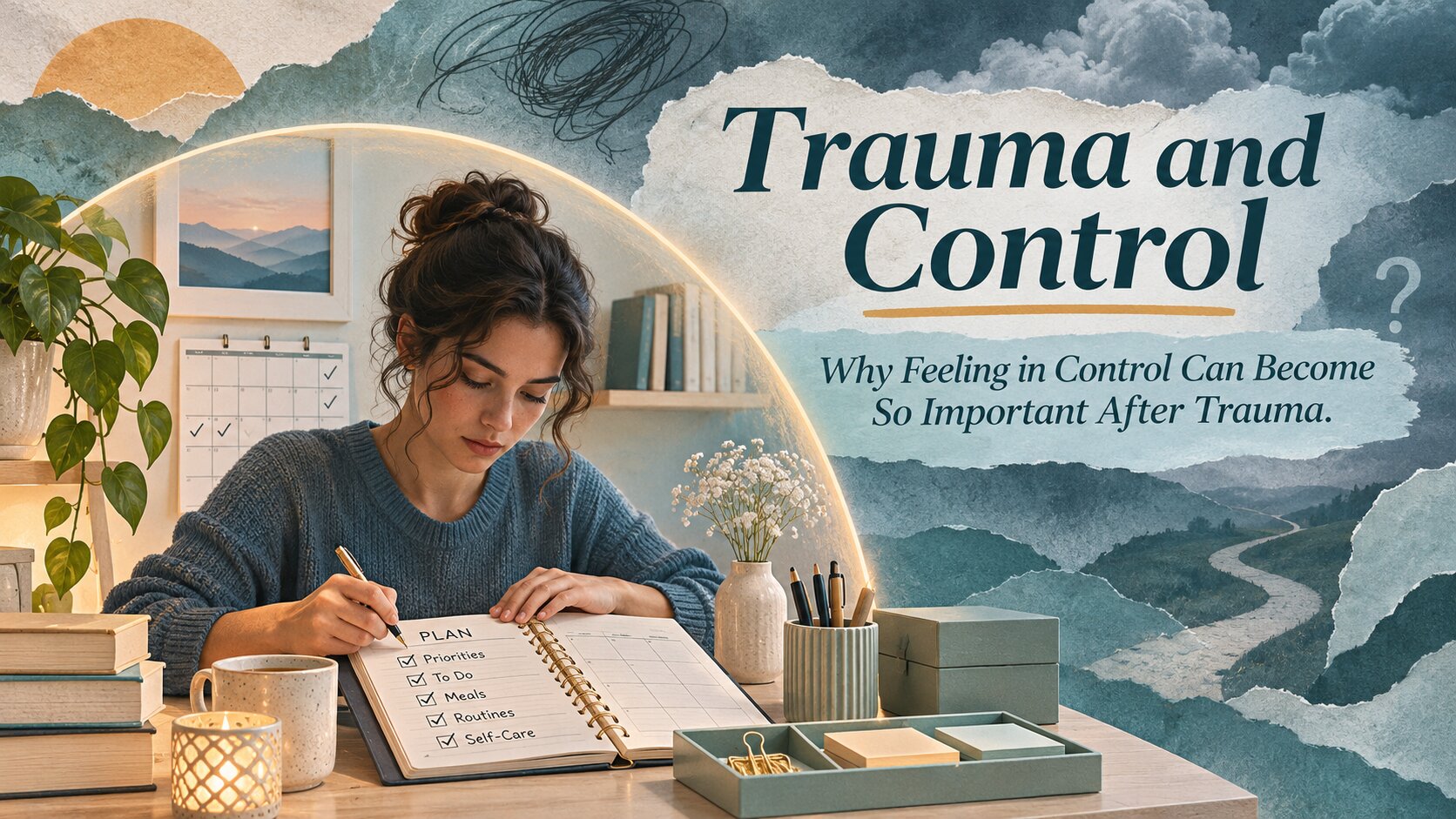
A friend changes dinner plans at the last minute. The change seems small, but it creates much more stress than expected. Another person becomes upset when someone moves an object in their home. Someone else plans every detail of a trip and becomes anxious when anything changes.
From the outside, these reactions may look controlling.
Sometimes they are.
But control can also have a history. After an experience that involved fear, helplessness, betrayal, or sudden change, being prepared may begin to feel closely connected with being safe.
Trauma often contains something a person could not control. They may not have been able to stop what happened, leave the situation, protect someone, predict the danger, or decide what happened next.
Afterward, control can become very important.
The person may organize routines carefully, dislike surprises, monitor other people, prepare for every possible problem, or become upset when plans change.
The deeper question is not simply, “Why does this person need control?”
It is also: “What does losing control now seem to mean?”
What Does Trauma and Control Mean?
Trauma and control are connected when attempts to create certainty become a way of managing fear, uncertainty, or helplessness after a painful experience.
This does not mean everyone who experiences trauma becomes controlling. It also does not mean that planning, organization, or strong preferences are signs of trauma.
People differ naturally.
Some enjoy routines. Others like detailed plans. Some prefer knowing what will happen before making a decision.
The issue becomes more important when control no longer feels like a preference. It starts to feel necessary for safety.
A person may believe that if they prepare enough, check enough, organize enough, or manage everyone carefully enough, nothing bad will happen again.
Control then becomes more than organization.
It becomes protection.
Trauma Often Involves Losing Control
Many traumatic experiences contain a painful loss of choice.
A person may know something terrible is happening but be unable to stop it. Someone may be trapped in an abusive relationship. Another person may face a sudden accident, disaster, attack, or medical emergency.
The details differ, but one experience often appears: I could not control what was happening.
That experience can change how uncertainty feels later.
Before trauma, an unexpected event may simply be inconvenient. After trauma, unexpected change may carry a stronger meaning.
It can feel like the beginning of something dangerous.
A delayed train is not just a delay. It means the plan is breaking down. A partner changing plans is not only disappointing. It can feel like proof that other people cannot be trusted.
The present event may be small.
But it touches an older experience of not knowing what would happen next.
Why Predictability Can Feel Like Safety
Predictability reduces uncertainty.
If someone knows where they are going, who will be there, when they will leave, and what will happen next, there are fewer surprises.
That can feel calming after trauma.
Someone may begin planning more carefully than before. They may research every location before visiting. They may want exact times, clear schedules, and backup plans.
None of this is automatically unhealthy.
Preparation can be useful.
The problem appears when predictability becomes the only condition under which someone can feel safe.
Life cannot be completely planned.
People arrive late. Weather changes. Children behave unexpectedly. Partners make different choices. Technology fails. Work becomes complicated.
If safety depends on everything happening exactly as expected, ordinary life can become exhausting.
Control Can Begin as Self-Protection
It is easy to describe controlling behavior as selfish.
Sometimes that description misses what is happening underneath.
A person may control their surroundings because uncertainty feels threatening. They may control conversations because conflict once became dangerous. They may control schedules because being unprepared once had serious consequences.
The behavior may therefore begin as an attempt to protect themselves.
But protective behavior can still create problems.
Someone may have understandable reasons for wanting control while also making life difficult for other people.
Both facts can be true.
Trauma can explain why control became important without making every controlling action acceptable.
Routine Can Be Helpful Without Becoming a Prison
Routine can support recovery after difficult experiences.
Regular meals, sleep schedules, work hours, exercise, and familiar activities can create useful structure.
Routine tells the day what happens next.
That predictability can reduce unnecessary stress.
But structure and rigid control are different.
A healthy routine can bend when needed.
A rigid routine may create intense distress when anything changes.
For example, someone may prefer eating dinner at seven. That is a routine. But if dinner at seven-thirty creates anger, panic, or conflict every time, something more may be happening.
The question is not whether someone likes order.
The question is whether order still serves the person, or whether the person has begun serving the order.
Control Can Hide Inside Planning
Planning often looks positive.
A person who plans carefully may appear responsible, efficient, and prepared.
That may be exactly what they are.
But sometimes planning also carries fear.
Someone may prepare for every possible problem because they believe they cannot afford to be surprised.
They may check reservations repeatedly. They may arrive extremely early. They may research every possible risk before making a simple decision.
Planning itself is not the problem.
The important question is what happens when the person cannot plan.
Can they adapt?
Can they make a decision with incomplete information?
Can they accept that something may not go exactly right?
If not, planning may be doing more than organizing life.
It may be trying to remove uncertainty from it.
Hypervigilance Can Become a Form of Control
Hypervigilance involves watching closely for possible danger.
Someone may monitor doors, people, sounds, facial expressions, or changes in the environment.
Watching creates information.
Information can create a temporary sense of control.
If I notice everything, perhaps nothing will surprise me.
This is where control connects naturally with our article Trauma and Hypervigilance: Why the Body Stays on Alert After Danger Ends.
Hypervigilance tries to control uncertainty through attention.
The person cannot control everything that happens, but they may feel they can reduce risk by noticing it sooner.
This strategy makes sense during danger.
Later, constant monitoring can become tiring. The person may remain mentally busy even in places where no immediate threat exists.
Control then comes at the cost of rest.
Avoidance Can Also Create a Sense of Control
Control does not always mean moving toward a situation and managing it.
Sometimes it means staying away.
A person who cannot control what happens inside a crowded place may decide never to enter one.
Someone who cannot control how a difficult conversation will develop may avoid the conversation.
A person who fears becoming emotionally overwhelmed may avoid memories, movies, places, or people connected with what happened.
This connects with Trauma and Avoidance: Why Staying Away From Reminders Can Make Life Smaller.
Avoidance creates control by reducing exposure.
The logic is simple: if I do not enter the situation, the situation cannot surprise me.
This may bring relief.
But repeated avoidance can slowly reduce choices. The person gains control over exposure while losing freedom in other parts of life.
Why Unexpected Change Can Feel So Difficult
Some people affected by trauma handle planned stress better than small surprises.
This can seem strange.
They may manage a difficult work project well because they know what is expected. Yet a cancelled appointment or sudden schedule change creates intense distress.
The difference may be predictability.
Known difficulty gives someone time to prepare.
Unexpected change removes that preparation.
A person may therefore react less to the size of the event and more to the feeling that control disappeared without warning.
They may become anxious, irritated, or angry.
This does not mean every dislike of change comes from trauma.
But trauma can make unpredictable situations carry greater emotional weight.
A change in plans may quietly raise an older question:
What happens now that I am no longer prepared?
Anger Can Appear When Control Is Lost
Anger and control often meet around frustration.
Someone carefully organizes a situation. Another person changes it. The response is immediate anger.
Why?
Sometimes anger restores a sense of power.
Uncertainty can make someone feel exposed. Anger feels more active.
Our article Trauma and Anger: Why Irritability and Rage Can Follow Trauma explores how powerlessness can remain important after traumatic experiences.
Control adds another piece to that discussion.
A person may not only become angry because something inconvenient happened. They may become angry because someone else suddenly took control of what happened next.
The reaction may be strongest in situations involving dependence.
Waiting for another person, trusting their decision, or accepting their timing can feel especially difficult.
The present conflict may therefore contain an older fear of helplessness.
Control Inside Relationships
Relationships require people to give up some control.
You cannot decide exactly what another person thinks, feels, says, or chooses.
That uncertainty is part of closeness.
After interpersonal trauma, this can become difficult.
A person may try to manage a partner’s behavior. They may want constant updates, exact schedules, or repeated reassurance.
They may decide how disagreements should happen. They may become upset when the other person needs space or makes an independent choice.
From inside the experience, these requests may feel like safety.
From the other person’s perspective, they may feel controlled.
This difference matters.
Trauma can make someone’s need for certainty understandable. But another person still has a right to independence.
Healthy relationships cannot require one person’s anxiety to determine every choice for both people.
The Difference Between Reassurance and Control
Everyone needs reassurance sometimes.
A person may ask a partner to send a message when they arrive safely. Friends may tell each other when plans change.
These are ordinary parts of relationships.
The pattern becomes different when reassurance never lasts.
A message helps for ten minutes. Then another check is needed.
The partner explains where they are. More questions follow.
Each answer reduces uncertainty briefly, but the need for certainty returns.
The problem is no longer missing information.
The problem is that no amount of information feels sufficient.
This is one reason repeated reassurance can become connected with control.
The person may keep trying to reach a level of certainty that relationships cannot provide.
Other people are separate people.
That fact always includes some uncertainty.
Control Is Not the Same as a Boundary
A boundary describes what a person will or will not accept for themselves.
Control tells another person what they must do.
The difference can be subtle.
A boundary might sound like:
“I will leave the conversation if you begin shouting.”
Control might sound like:
“You are not allowed to disagree with me.”
A boundary protects someone’s choices.
Control removes choices from someone else.
Trauma can make boundaries especially important. Someone who once had little power may need to learn that they can leave, refuse, disagree, or protect their privacy.
That is different from controlling everyone around them.
Recovering agency should increase personal choice.
It should not require removing another person’s choice.
Trauma Can Explain Control Without Excusing Harm
This distinction deserves attention.
Controlling behavior can become harmful.
A partner may demand passwords. A parent may allow a child no independence. Someone may monitor another person’s location constantly or decide whom they are allowed to see.
A trauma history may help explain why losing control feels frightening.
It does not make harmful control acceptable.
The same principle appeared in our discussion of anger.
Understanding is not permission.
People deserve compassion for what happened to them. People around them also deserve respect, privacy, safety, and freedom.
Trauma theory becomes less useful when explanation removes responsibility.
Control Can Be Directed Toward the Self
Not all control is directed at other people.
Some people become extremely strict with themselves after trauma.
They may control food, schedules, work, exercise, appearance, emotions, or daily habits.
Rules can create predictability.
“If I do everything correctly, I will be safe.”
“If I never make a mistake, nothing bad will happen.”
“If I stay disciplined, I will never lose control.”
These ideas can create a temporary feeling of order.
But perfection is impossible.
When normal mistakes happen, the person may become harsh toward themselves.
Self-control then stops being supportive discipline.
It becomes another place where fear is in charge.
Control Can Look Like Competence
One difficulty with trauma and control is that the behavior may receive praise.
A person who anticipates every problem may become excellent at work.
They may always have a backup plan.
They may remember every deadline.
They may be the person everyone relies on during a crisis.
These skills can be real strengths.
But strength can carry a hidden cost.
The person may feel unable to rest because everything could fall apart if they stop managing it.
They may find delegation almost impossible.
They may become resentful because other people seem less careful.
They may look highly capable while feeling constantly responsible for preventing disaster.
Competence and fear can exist together.
The fact that a coping strategy produces success does not mean it creates peace.
Why Delegating Can Feel Unsafe
Delegation requires trust.
Someone else will complete the task.
They may do it differently.
They may make a mistake.
For a person who strongly connects control with safety, this uncertainty can be difficult.
They may redo other people’s work, give excessive instructions, or decide it is easier to handle everything themselves.
In the short term, this can reduce anxiety.
Over time, it creates more responsibility.
The person becomes overwhelmed because nobody else is allowed to carry enough of the load.
Then they may conclude:
“I knew I had to do everything myself.”
The belief becomes self-supporting.
Control creates the conditions that seem to prove control was necessary.
Control Can Damage Trust
Trust requires tolerating some uncertainty.
You cannot fully control another person’s choices and still call the relationship trust.
You can observe patterns. You can communicate. You can set limits.
But eventually, trust includes allowing another person to act without constant supervision.
Trauma can make this difficult, especially when another person caused the original harm.
The article Trauma and Psychoanalysis: How Relationships Shape Healing explores how earlier betrayal can remain active inside later relationships.
Control can become one way of managing that fear.
Instead of asking, “Can I trust this person?” someone may try to ensure they never need trust.
If I monitor everything, I do not have to trust.
If I decide everything, I do not have to depend.
If I never become vulnerable, nobody can surprise me.
This may feel safer.
It can also make closeness very difficult.
Control and the Fear of Depending on Others
Dependence can feel dangerous after trauma.
Another person now has some influence over what happens.
They can disappoint you.
They can arrive late.
They can misunderstand.
They can leave.
Someone who learned that dependence leads to danger may try to become completely self-reliant.
They may refuse help even when exhausted.
They may avoid asking for emotional support.
They may prefer carrying every responsibility themselves because needing someone feels like losing control.
Self-reliance can be a strength.
But nobody controls everything alone.
Human life includes dependence.
We rely on doctors, partners, coworkers, families, communities, and strangers.
Recovery may therefore involve learning that dependence does not always mean helplessness.
The Need to Control Emotions
People may also try to control internal experience.
They may believe they must never cry, panic, become angry, or feel afraid.
Strong emotion itself may feel dangerous.
This can happen when trauma involved moments of being overwhelmed.
The person may tell themselves:
“I cannot let myself go there.”
They keep tight control over expression.
From outside, they may appear calm.
Inside, they may be working constantly to prevent emotion from becoming too strong.
This is another form of control that can become exhausting.
Emotional regulation is useful.
Emotional suppression is different.
Regulation allows feelings to exist while influencing how someone responds.
Rigid control treats the feeling itself as something that must not exist.
Control Does Not Remove Uncertainty
This may be the hardest part.
No amount of preparation can remove all uncertainty.
A person can lock the door and still not control everything outside it.
They can plan carefully and still face delays.
They can choose trustworthy people and still risk disappointment.
They can make healthy decisions and still become ill.
They can love someone and still face loss.
Trauma makes this reality especially painful because the person already knows what unexpected harm feels like.
Trying to control everything can become an attempt to make sure life never proves dangerous again.
But complete control is not available.
The attempt can therefore continue without ever feeling finished.
There is always one more thing to check.
When the Need for Control Is Realistic
Not every attempt to control a situation is excessive.
Sometimes a person’s environment is still unsafe.
Someone dealing with an abusive partner may need careful plans.
A person facing stalking may need to monitor security.
Someone managing a serious medical condition may need strict routines.
People living in unstable environments may have good reasons to prepare carefully.
Trauma theory should never assume that every need for control is psychological.
Reality matters.
Before asking someone to tolerate uncertainty, we should ask whether the uncertainty involves genuine danger.
Reducing control is not a useful goal when control is helping someone stay safe.
Control and Meaning After Trauma
Control is not only about behavior.
It can become part of how someone understands the world.
Before trauma, a person may believe that ordinary care is enough.
After trauma, the belief may change:
“If I am not in control, something bad will happen.”
This gives control a larger meaning.
Planning becomes safety.
Dependence becomes risk.
Surprise becomes threat.
Mistakes become danger.
Our article Trauma and Meaning: Why Life Can Feel Different After Trauma explains how trauma can change basic beliefs about safety, trust, identity, and the future.
Control may become one response to that changed world.
The person is not simply organizing events.
They are trying to rebuild a sense of order.
What Psychoanalysis Can Add
Psychoanalysis asks not only what a person does, but what that behavior means in their life.
Control can therefore be explored as more than a habit.
What feeling appears when control disappears?
Fear?
Shame?
Helplessness?
Anger?
Dependence?
A memory of another person having too much power?
These questions may reveal that two people with similar controlling behaviors are protecting themselves from very different experiences.
One may fear physical danger.
Another may fear humiliation.
Another may fear abandonment.
Another may fear becoming emotionally overwhelmed.
The behavior looks similar.
Its meaning is personal.
This is one reason trauma theory should avoid simple formulas.
From Control Toward Agency
The opposite of excessive control is not helplessness.
It is agency.
Agency means being able to make meaningful choices while accepting that not everything can be controlled.
A person with agency can plan.
They can also adapt.
They can set a boundary without controlling another person.
They can prepare for a risk without expecting complete certainty.
They can ask for help without believing that dependence makes them powerless.
This distinction is important.
Trauma may create a powerful need never to feel helpless again.
Trying to control everything is one answer.
Building agency is another.
Control says:
Everything must happen according to plan.
Agency says:
I can respond even when it does not.
That is a very different kind of safety.
Flexibility May Be More Useful Than Total Control
Healthy control is flexible.
Someone can prefer a plan while accepting changes.
They can organize their home without becoming distressed when something moves.
They can make careful decisions without needing complete certainty.
They can trust another person while keeping appropriate boundaries.
This does not mean becoming careless.
It means having more than one possible response.
Trauma often narrows options.
Control can become automatic because uncertainty feels unbearable.
Greater flexibility restores choice.
The person can decide when control is useful and when it is no longer necessary.
When Control Begins Interfering With Life
The need for control may deserve closer attention when it repeatedly creates problems the person does not want.
Relationships may become tense.
Delegation may feel impossible.
Small changes may create intense stress.
The person may spend large amounts of time checking, preparing, or worrying about what could go wrong.
They may feel exhausted from carrying responsibilities that could be shared.
Professional support may be useful when trauma-related reactions remain persistent or begin interfering with important parts of daily life.
The goal should not be to remove every routine or preference.
It is to help the person recover more choices.
What Trauma Theory Still Needs to Ask About Control
Control raises several questions that deserve deeper discussion.
One concerns technology. Location sharing, cameras, phone tracking, smart-home alerts, and instant messaging allow people to monitor more than ever before. These tools can improve safety, but they can also make constant checking easier.
When does useful information become continuous monitoring?
A second question concerns parenting. Parents naturally need to protect children. But how can someone with a trauma history distinguish reasonable protection from fear-driven control as a child becomes more independent?
A third question concerns institutions. Hospitals, schools, workplaces, and governments control important parts of people’s lives. How should trauma theory think about control when power does not belong only to the individual?
There is also a deeper question about recovery:
Does healing mean feeling more in control, or becoming more able to live with what cannot be controlled?
The answer may involve both.
Readers who have thoughts about these questions are welcome to begin that discussion in the comments. A thoughtful question may become the starting point for another direction in trauma theory.
Conclusion
Trauma can make control feel important because trauma often contains the experience of losing control.
Something happened that could not be stopped, predicted, escaped, or changed.
Afterward, planning may feel safer. Routine may become more important. Monitoring may increase. Unexpected change may become harder to tolerate.
These responses can make sense.
They can also become costly when the need for control begins limiting relationships, rest, freedom, trust, or flexibility.
The answer is not to abandon control completely.
People need structure. They need boundaries. They need choices and ways to protect themselves.
The deeper difference is between control and agency.
Control tries to make the world completely predictable.
Agency accepts that the world contains uncertainty while preserving the ability to choose, respond, adapt, and protect what matters.
Trauma may teach someone:
Never be powerless again.
Healing does not require returning to powerlessness.
It may mean discovering something more durable:
I cannot control everything that happens, but I can still have choices about what I do next.


